

GREY OCEAN STRATEGY
Fully automated luxury positioning

Our workshop series Autonomous Strategy is coming back next month with a positioning intensive. More details soon. Email us to get on the waitlist.
From the airplane window a massive advertisement is visible: “First in AI. Best in agentic. Number one in happy.” Neither of us has ever heard of this company. Especially in San Francisco, but arguably everywhere, firms are either “narratively homeless” or “narratively at war” depending on your perspective; meanwhile, the field of play is increasingly automated, contested, fragmented, foggy, and chopped. Tech development is basically commoditized, so now distribution is everything – which means it’s all about positioning, that is, the space you take up in people’s minds. But who are those people? And (perhaps more importantly) are they even people at all? More on that in a moment.
Let’s begin with a key element of the 21st Century positioning canon: Blue Ocean Strategy, one of the best selling marketing books of all time. Published in 2005, the book’s eponymous metaphor split markets into two types: red and blue oceans. Red oceans (that is, those running red because of blood) are existing markets with defined boundaries, where participants fight over the same demand, ultimately locked in a price competition. Blue oceans are uncontested new markets where competition doesn’t exist (at least not yet), because you’ve redrawn its boundaries.
Naturally you want to be in, or create, a blue ocean.
Now, 21 years after the publishing of Blue Ocean Strategy, this idea sounds rather twee. If you discover or create new demand today, others are ready to serve it in an instant. It’s incredibly difficult to outrun meta decay simply by establishing a fresh category or market to operate in. The sharks have become faster.
We used to be obsessed with the book. Maybe part of our enthusiasm came from its poptimist neoliberal aesthetic (it was post-internet!), but more importantly, it was the framework’s fundamental reliance on narrative repositioning that really appealed to us. Sure, some degree of newness or differentiation was required for the actual offering, but the real heavy lifting was semantic: you shift the frame of reference or narrative cluster your thing is inhabiting to a new one, with a new audience. You get rid of the things people compare your thing to – or change them to other, better things. In theory this could be a form of commercial poetry; this is not a pipe, but a protocol. It’s just words that are doing the magic, and this was something we loved.
[yellow tail] (sic) is one of the book’s major examples of a successfully executed blue ocean strategy. The Australian wine brand escaped the battle of heritage and prestige-mining of traditional winemakers by introducing a new category it could lord over alone: wine for people who don’t like wine. These people would be more prone to weighing [yellow tail] against a Bacardi Breezer than a competing Chardonnay. The other canonical example many are familiar with is Cirque du Soleil. Their blue ocean move was eliminating expensive circus staples (most notably, animals) and adding theatrical narrative and artistry to make the product and positioning not-circus, targeting adults and corporate clients willing to pay theater prices
The 2010s DTC and third-wave-industrial-complexes are full of other relevant case studies (this time from us, not the book). The DTC playbook was basically to take a commoditized market (e.g. coffee or hamburgers) and escape it – by means of an elevated experience-heavy brand-first offering – into a category of your own making. However, at this point the strategy was so well established that each of these newly created verticals that proved to be successful quickly devolved into hyper competitive markets filled with indistinguishable offerings. (Slop bowls are another great, later example of a meta eating itself.)
The DTC dream of creating positioning escape velocity via brand building enabled by endless ad spend proved to be an illusion. In fact, it was made impossible by the same technology that created the whole industry in the first place. Digital advertisement was the foundation of the DTC business model (take commodity → brand it → build brand through digital ad spend so that people are willing to pay a premium for commodity → hit escape velocity with brand value, reduce ad spend → make money), but the same ad platform algorithms pitted advertisers against each other, in the process squeezing out every VC dollar available. The money ran out before sustainable brand advantage was reached. This past May Everlane was sold to Shein, end of story.
It’s easy to see the effects of the vast difference in the speed and distribution of information between 2005 and today. Blue ocean strategy dreamed of sustainable moats created by positioning, which worked in an era where discovery and distribution were human-led affairs; capturing mental real estate was actually defensible for a meaningful amount of time. The DTC extinction event showed what happens when discovery is algorithmic, and now we’re about to see what happens when it’s agentic.
So, in light of all this, how should one actually think about positioning today? In a sense positioning is everything. In a world where fundamentals or ground truth are irrelevant, or at the least negotiable, where a thing sits, what narrative it’s part of, what associative cluster it finds itself in is all that matters (look at Liquid Death). But it’s also nothing, as most positional advantages are so easy to replicate and crowd out.
The difference between everything and nothing is the ever rising waterline of commodification.
What falls below it sinks into a grey ocean. Down here, competition is total but largely invisible, fought by recommendation engines and, increasingly, agents. Any premium or margin is quickly eroded by price- and spec-matched, grey label competitors. The positioning and differentiation that brands (or individuals) have spent years or even decades building is just noise to the machine-arbitrator.

Where is the commodification waterline? Probably higher than you think (take a consumer niche you’re familiar with, search it on Aliexpress and prepare to be surprised). But the grey ocean is swallowing much more than markets for physical goods. For example, think about:
DJs
Cultural analysis Substacks
Venture capital
Creators
Celebrities
Pundits
Etc.
It feels like we should mention slop here. As defined in our recent piece on Instagram, to us slop is the use of a low grade creative output made because there’s an incentive to do so – regardless if it’s created using AI or not. Slop is the gunk at the bottom of the grey ocean that still satisfies an economic function. The boundary between gunk and water is diffuse but rising.
Then there are agents. It’s a bit embarrassing to keep harping on about them, as the delta between their declared utility and actual utility (which is very real, don’t get us wrong) keeps widening. But they are relevant here. Agentic commerce is still small, but growing. If we assume the trend continues, soon the human distinction maker has left the room for the majority of the information economy. At that point competition isn’t anymore for attention (which in a limited sense is absolutely a good thing), but for an agent’s ranking function. “Positioning” and “differentiation” get recompiled into machine-readable, strategist-illegible parameters. SEO is replaced by AEO. (We wrote about this very scenario in Brands vs Agents a while back.)
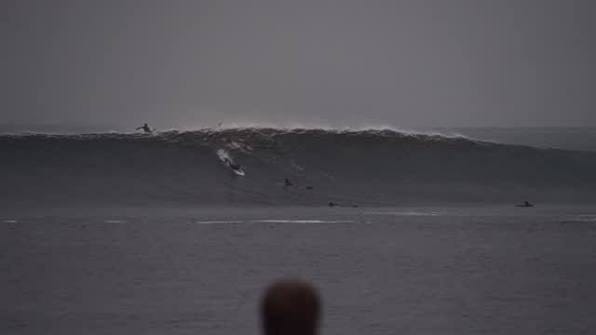
When we get there, the main positioning question – the one you need to answer before you get to do any of the fun type of positioning – is: where do you or your thing sit relative to the waterline? This is a question that cannot be resolved rhetorically or by “doing positioning” on its own as it has to do with the fundamental nature of the thing itself: are you the thing being optimized, or the thing others refuse to let anyone optimize for them? Are you under the surface of the grey ocean, or above it?
Below it, there is no positioning problem to solve, as there is no perceiver to position for. Down there you need to compete on the parameters or perish. Which isn’t actually anything new, most of the economy has always looked like this. Now it isn’t just Chinese cement suppliers and their like, but also your podcast.
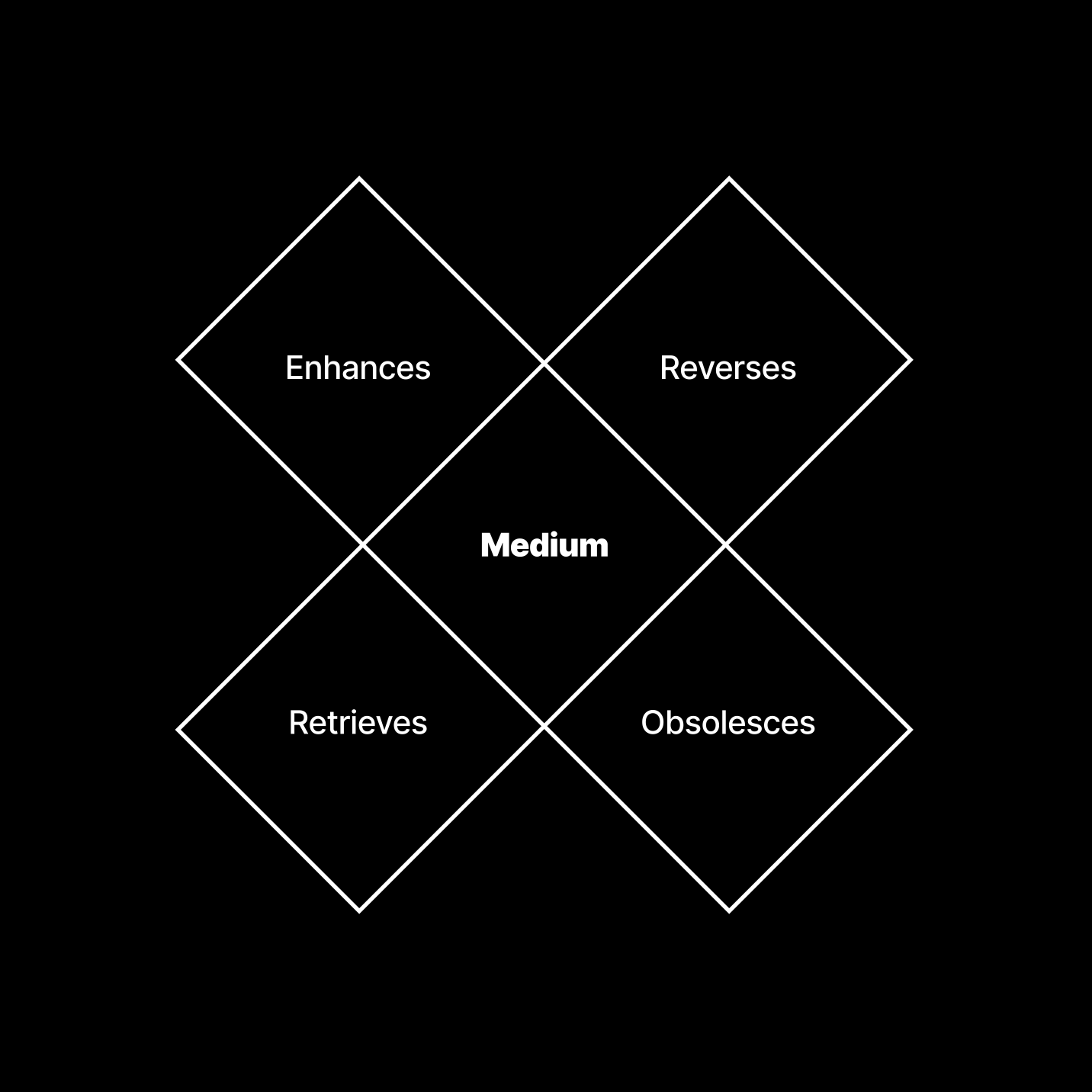
The things that stay above the surface resist optimization, in some way or another: through friction, pain, social cost, inefficiency, illegibility, charisma, waste. The waterline of commodification is enabled technologically, but at the margin set by human demand. All this is to say that it’s not a given that the grey ocean will swallow industry after industry, human endeavor after human endeavor in a linear fashion (even if it’s hard to see its rise reversing). Consumer and cultural preferences regarding what is to be optimized and what is not might still shift dramatically. Or as our beloved McLuhan Tetrad dictates about any new technology: whatever it obsolesces, it transforms into a luxury – which is unoptimized by definition.
Our final advice on how to swim in the grey ocean is this: you don’t get to choose the height of the waterline but you do get to choose whether you’re building something that might float.
PS. Grey Ocean Strategy is not to be confused with Black Ocean and Black Ocean Strategy, a record label and radio program Martti co-founded and ran between 2013-2016 :)
great point about the optimization problem - fascinating times we're living in where The Zeitgeist is deciding on what is acceptable to slopify and what should stay organic in real time, as we speak