

TASTESLOP
Notes on technological anxiety

This text originally appeared on Emily’s X
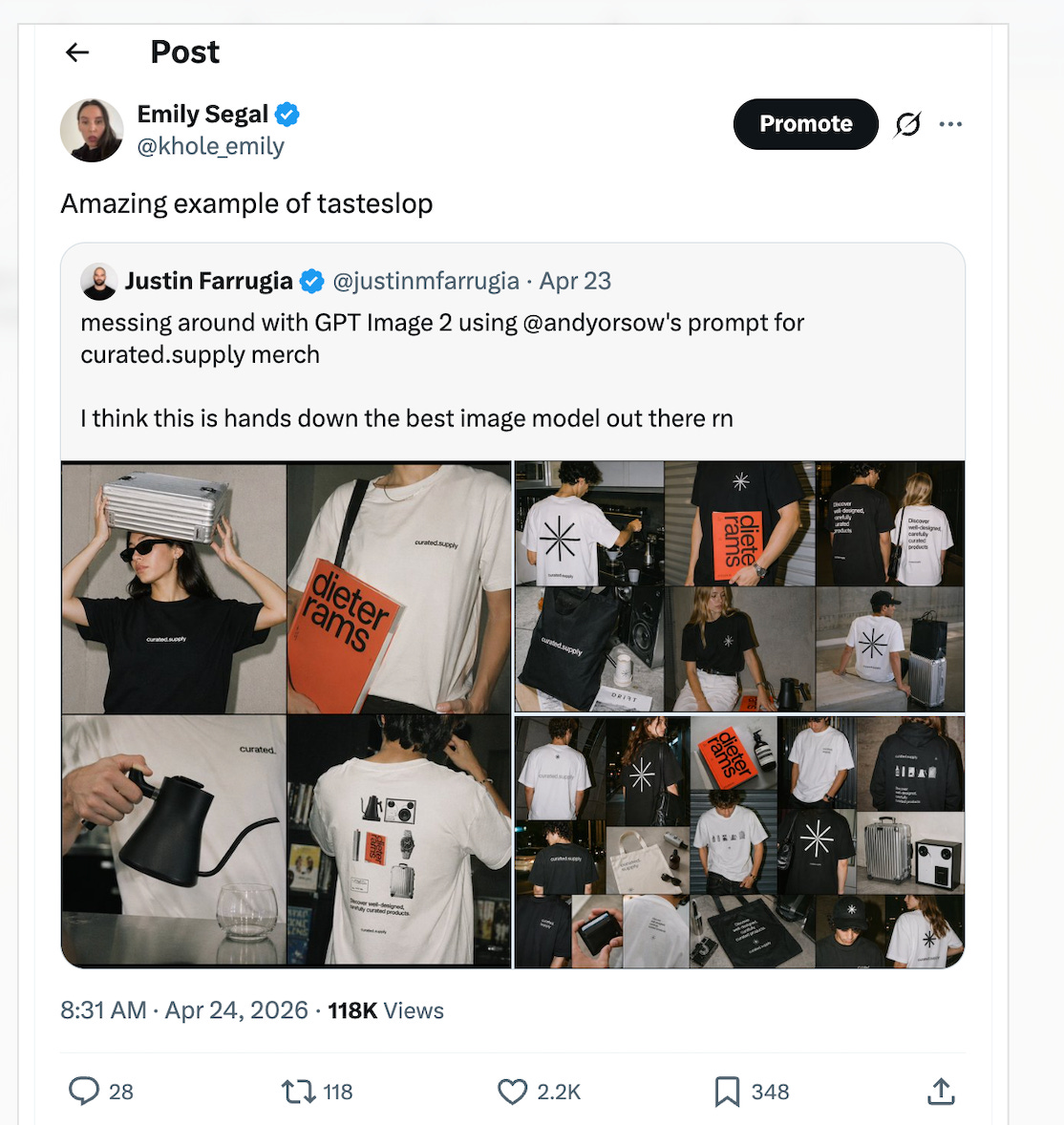
The other day I pointed out an amazing example of tasteslop. Now I’m trying to define what tasteslop actually is.
Defining tasteslop:
Slop made out of things considered to be tasteful
The image above is a great example because it is clearly slop (generated brand moodboard) but includes modernist design fetish items – Rimowa, skinny neck kettle, Dieter Rams book, etc. Heavy handed “wabi sabi” moves inserted to make slick or systematically generated design feel more personal are also in this category.
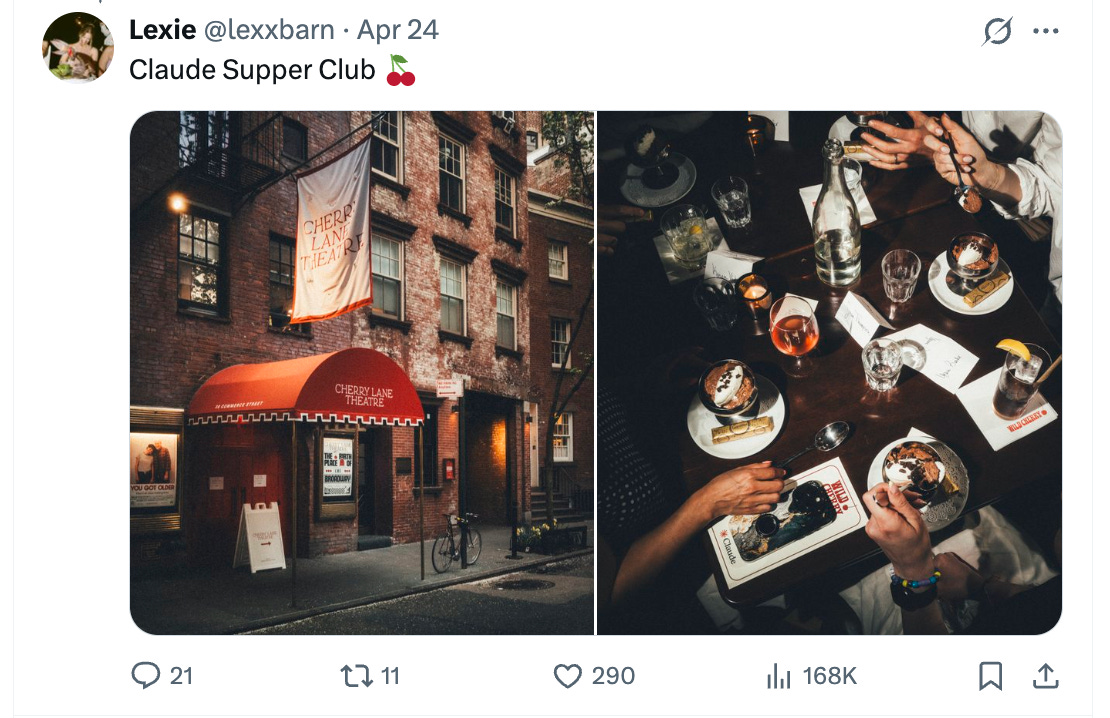
Tasteful things deployed in service of slop
Influencer dinner for Claude at a classy restaurant (tech world curated dinner culture generally), Evan Kinori on a dweeb raising capital for AI SaaS (this is the issue people have with Kinori), the Notion office (taste as SaaS laundering)
Recurrent tech discourse about the significance of taste
One of the latest of very, very many examples:
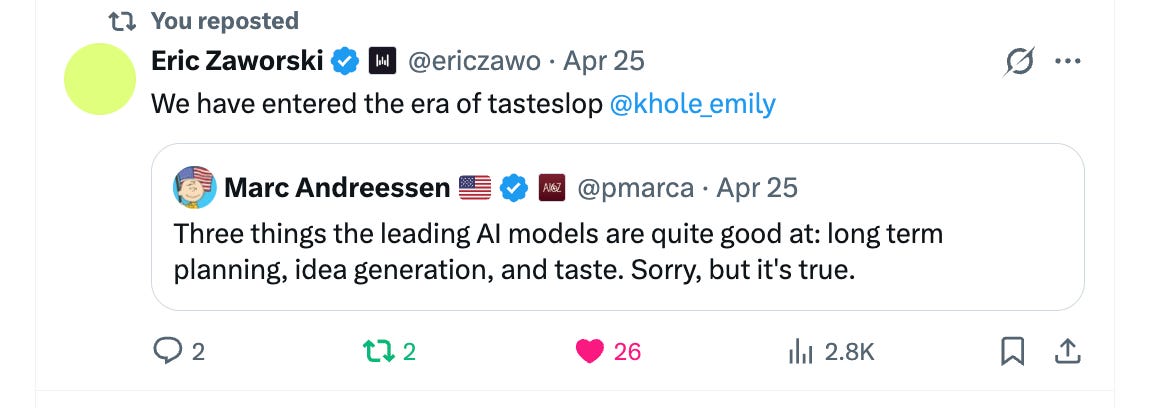
The discourse circles around a few themes – how important taste is, if AI and/or agents can have taste, and if humans having taste be one of the last meaningful moats against total automation, and if so what will that look like.
Regarding whether agents can have taste, legendary designer and branding expert Michael Rock believes it is indeed possible:
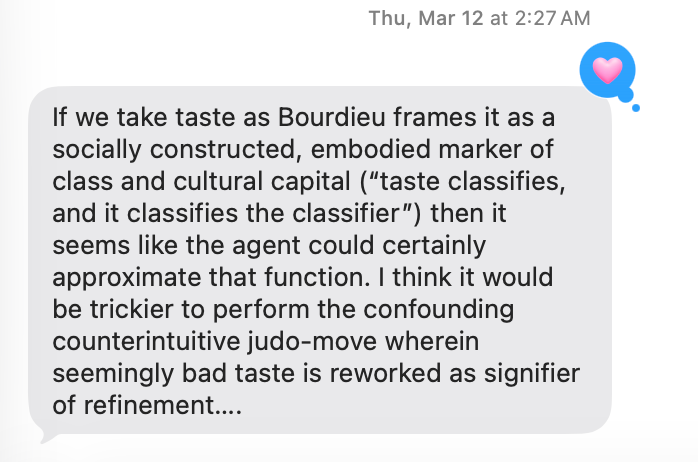
To riff on this: if taste classifies (and classifies the classifier), tasteslop is what happens when the classifying function is automated, overly explicit, or reduced to spitting out rote taste tokens. The judo-move Rock describes here takes us to questions of camp, but we’ll get to that in a minute.
First, my personal definition of what makes for good taste:
Discernment. Can you tell one thing from another, and can you make a specific, articulated judgment about why one thing is better than another?
Pattern Recognition. This has two parts: knowledge of the past (this can be art history or meme culture or something else entirely, but you have to be able to recognize when something new is rhyming with the past, contradicting it, remixing it, etc.) and intuition (this is art not science, this might be somewhat mystical), it is a sensitivity that allows you to predict things, to be early, to know what experiment to try next as a scientist, to know what song would sound right next, etc.
Idiosyncrasy. Personal relevance is the type of thing that makes taste meaningful, contextual, and automatically somewhat esoteric. The menswear guy had a great example of this - he said he liked polo not because ralph lauren is a legendary designer but because the best dancers at a party he loved to go to in his youth wore polo, so it has that association (and this is esoteric because you had to be there). Similarly, Martti and I both love this particular Italian kid’s clothing brand because it reminds us of what we wore to Janus parties in 2013 and it’s funny to see that design language on children. The whole long history of the Jewish preppy thing fits in this category too - for example my dad’s lifelong love for J. Press and its relationship to him being one of the few jews at Princeton Day School and his observation of the cash poor WASPs there with their worn collars. The personal and idiosyncratic connection makes things less obvious and prevents them from being meaningfully cloned by absolutely everyone (i.e. becoming tasteslop) even if the actual taste markers are not totally different in content (Polo and preppy are not exactly unique)
I would say the biggest thing people are missing about taste across the board is that it is relative, contextual, and social. Taste needs to be socially validated. There is no such thing as taste if it falls in a forest.
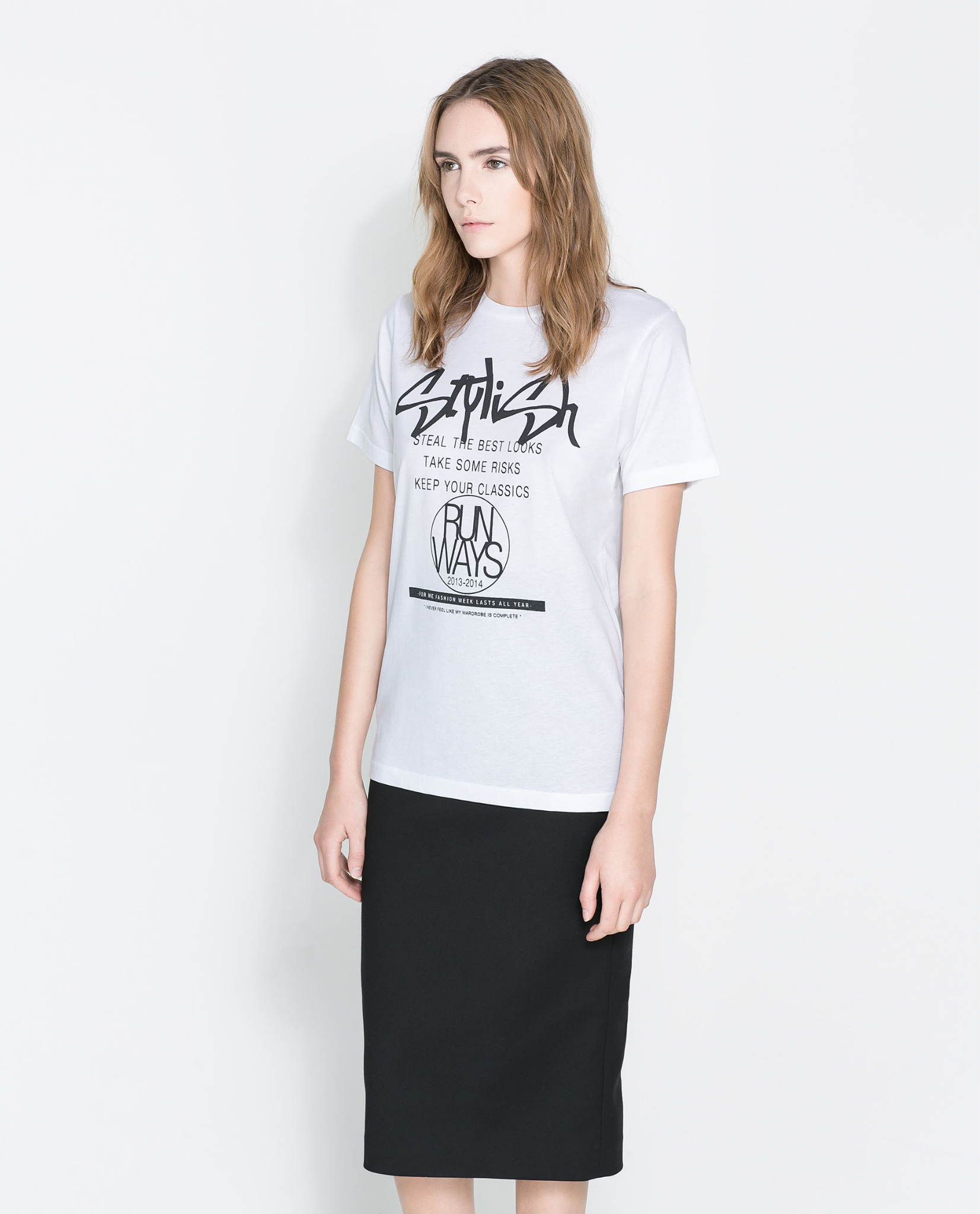
My K-HOLE co-founder Greg Fong sums it up well: “Nobody can have taste unless somebody else can see it. The LLM is not a person. It isn’t subjective either. You can subjectively like it, and it can be weird enough to be stylish, but it doesn’t actually have taste; it can only look for data indexes of taste. And that’s the hollowness at the core of your post and why it went off…The data index says Dieter Rams is good, but the data index can’t really say you should start getting into the architecture of big box retail and that would feel really refreshing in the discourse. Because it can’t actually say what would feel refreshing in the discourse in general. It can only serve up boring opposites, or connections driven by data. Some of those things might be interesting, but it’s not really social. Big takeaway is that we read taste socially, we don’t know how to do that with the data we have, and probably also that it will always need to be validated socially too.”
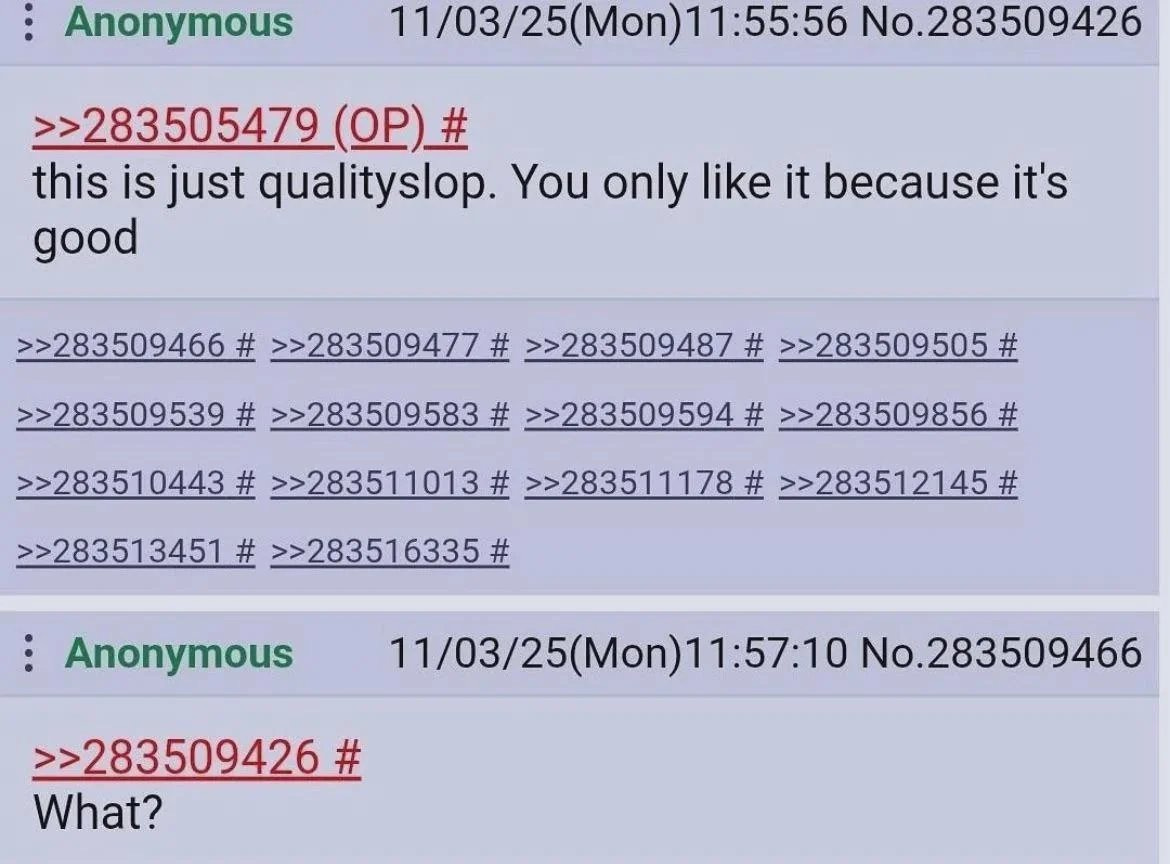
It is perhaps obvious yet important to note that the same object can be tasteful, vulgar, camp, slop, or beautiful depending on the social route by which it arrives. If status signals were consistent everywhere, people in Japan would not be spending hundreds of dollars on a Trader Joe’s tote bag.
In this vein: copying and pasting things that you think are tasteful is actually a hallmark of bad taste (which anyone with good taste knows). I have a Togo couch and multiple pairs of tabis and I actually think they are both definitively vulgar at this point (or at least cheugy), specifically because they have accrued so much emphasis as iconic and expensive high design objects. They are obvious.
So one reason tasteslop stands out as borderline uncanny is because it decontextualizes tasteful objects and reveals the tasteless void within them.
In Nemesis researcher Sailor’s words: “I think this is because tasteslop Purports to be Representational when it is actually fragmentation. Taste = boundary . AI deteratorializes Taste, removes Psychic AT Field Lines. Everyone bEcomes one Giant Womb Sibling. The hubbard electrometer LOLL feels Weirdly tasteslop to me.”
Tasteslop is cultural capital after extraction, after it’s been through the blender.
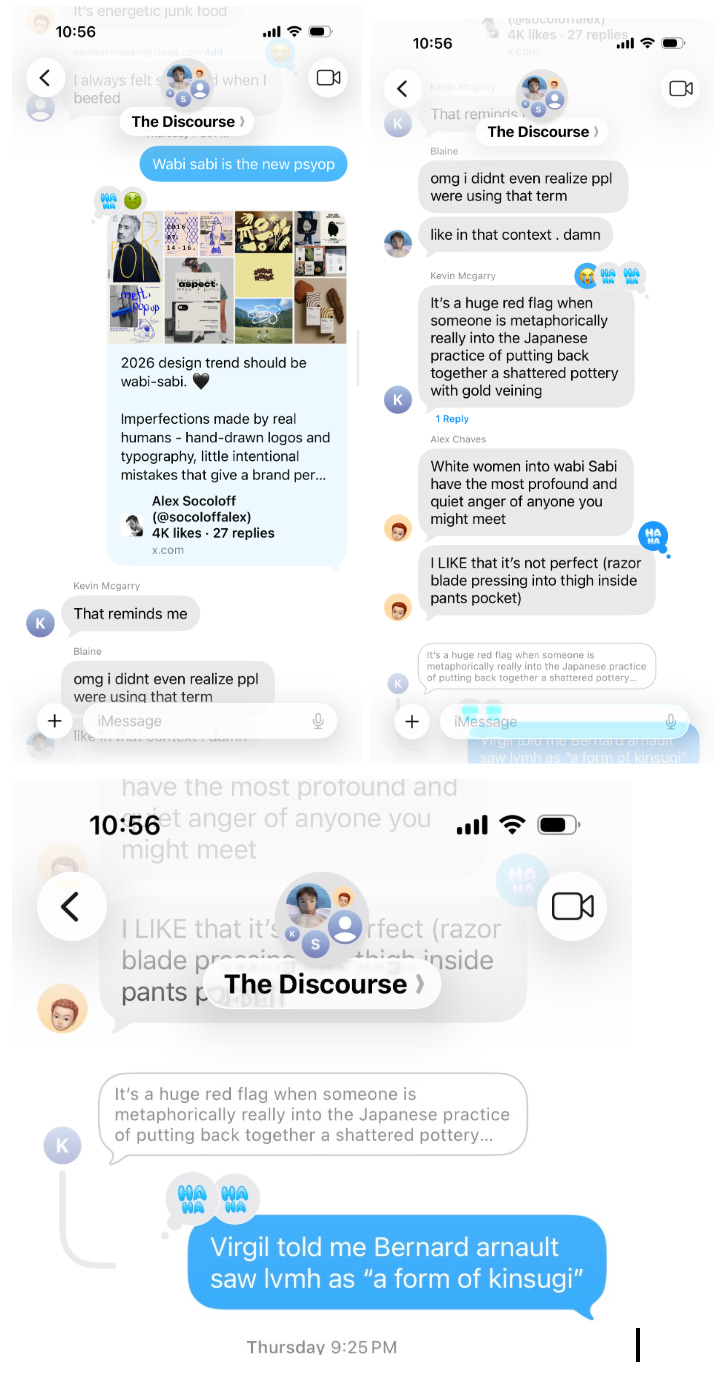
A few additional examples of non-LLM tasteslop:
Jennifer Lawrence’s lauded street style: a mix of modern, “fluid,” creative-adjacent affluent woman brands…she looks more like a shopper/demographic and less like an individual figure, which I think is what people like about it (see also “chicslop” from Nymphet Alumni). My Bordieu agent puts it this way: “the outfit reads as tasteful because it indexes a whole lifestyle, class fraction, body ideal, consumption pattern, and cultural position..But tasteslop breaks that coherence. It assembles the signs of a habitus without the habitus…tasteslop is is curation in the absence of a social body”
Monocle Magazine
These 2014 Zara graphic tees. I like the one that says “trendy is a six letter word that defines my style” (Are.na channel: https://www.are.na/emily-segal/zara-t-shirt-imgs)
Muzak, obviously
International Art English
This morning I was thinking out loud about what it would mean for – say – an agent to comb through Google Reviews and suggest particular off-the-beaten path restaurants. What if those restaurants were good? Wouldn’t you say the agent has good taste? Couldn’t you say my longrunning Durutti Column Spotify radio is also in this category?
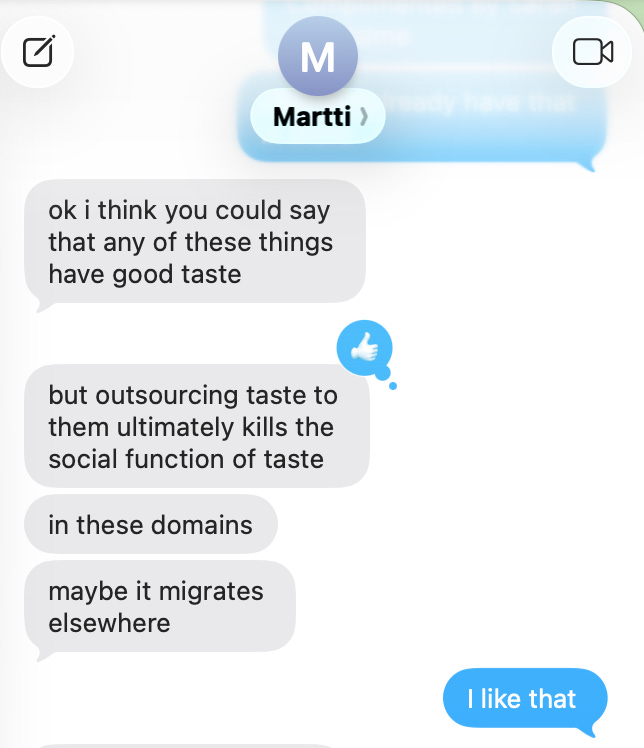
Martti goes on: “The general problem w sloptimization is even if it’s clearly inferior to the thing it replaces (whether it’s art, text, automated workflows) the fact that it’s so cheap and abundant makes us settle for worse quality outputs across all these domains (“quantity has a quality of its own” –Stalin). Taste – as it’s socially constructed so far – is a skill and has a huge proof of work element to it. But if you can bypass this and sloptimize your aesthetic discernment and intuition by outsourcing it to AI we end up having this new arena of signaling (i.e. tasteslop) which isn’t actually about taste at all but something else.
Not saying PoW taste is immune to tasteslop as preferences will likely be rewired (ppl settling for the good-enough) but there is a scarcity element to it (+ associated cultural capital) which can’t be captured by slop. So tasteslop will ultimately fail as a signaling mechanism at scale bc the market is flooded with increasingly meaningless and competing expressions of “taste”.
At the same time our overlords aka the owners of the slop factories might be able to exchange their own financial capital to cultural capital at an increasing rate – and their preferences becoming new hallmarks of “good taste”. And they obviously don’t need tasteslop to do it.”
In the Umami Theory of Value we argued that paradox itself is at the heart of contemporary consumption:
Through the lens of his theory, we’ve come to see it this way: strong flavors, namely umami, mark a surge of intensity in the flow of experience. It also becomes clear that paradox itself is at the heart of contemporary consumption.
For example:
“This shouldn’t be good but it is”
“This doesn’t seem like what it’s supposed to be”
“This is both too much and not enough”
“I shouldn’t be here but i am”
“This could be anywhere but it’s here”
Tasteslop has no such tension within it and in that sense is umami culture ascended…
Without tension, without ambiguity, without ACTUAL ESTOTERICISM, there is no truly good taste.
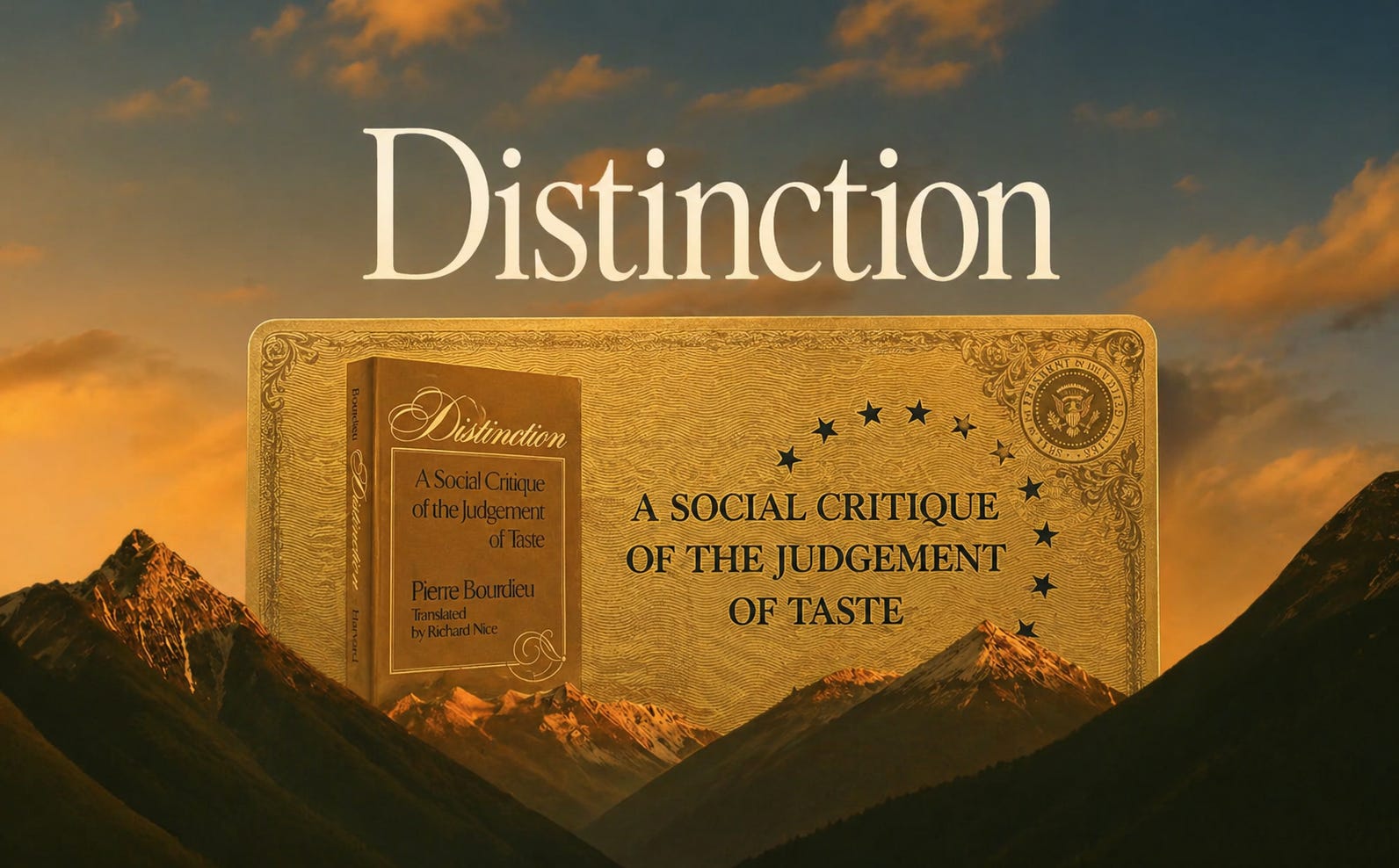
And on this point, let’s return to the topic of camp. Susan Sontag’s essay “Notes on Camp” is essential for understanding the mechanics of taste. “Camp is the answer to the question: how to be a dandy in the age of mass culture,” Sontag wrote in 1964. “The dandy was overbred. His posture was disdain, or else ennui. He sought rare sensations, undefiled by mass appreciation. He was dedicated to ‘good taste’.” There would be no sloptimism or vulgar image without camp, which revels in artificiality, and finds a way to preserve the esotericism of good taste even as culture proliferates wildly. “Camp taste transcends the nausea of the replica,” Sontag wrote.
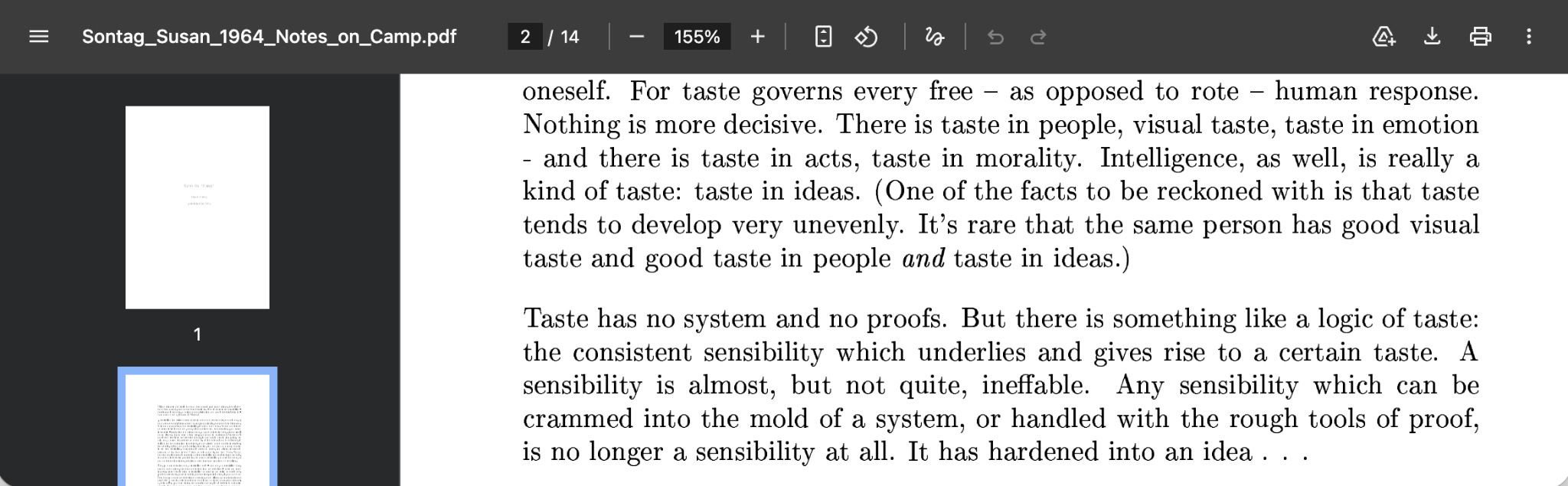
The cryptic nature of camp is at its core. It’s a way of seeing the world, a sensibility that adds up to “a private code or a secretly shared badge of identity” (Bruce La Bruce, Notes on Camp and Anti-Camp). In a world where artificiality and mass production have flourished way beyond what Sontag may have imagined, I think camp is a good lens for understanding good taste in general. Which means that in my view, good taste relies on a degree of esotericism. I believe this year’s discourse on friction was getting at a similar point. Things that are obvious (Togo couch) have lost their esoteric quality. But the good news is that fresh esotericism can spring up at any moment. It merely takes a couple of based dandies observing the world to create some (“there exists, indeed, a good taste of bad taste” [Sontag]) – which is to say, those who have truly good taste about culture can create rare esoteric bubbles of new good taste merely by observing the world and sharing their emergent sensibility.
This relates to an important part of Bordieu’s Distinction, regarding the battle in the dominant class between those with economic capital and those with cultural capital. In the very same dominant class, Bordieu writes, there is a battle between economic capital and cultural capital.
My Bordieu agent puts it this way: “The economically dominant faction has high economic capital and often less consecrated cultural capital. Their taste tends toward luxury, comfort, possession, abundance, and visible signs of success. They often prefer cultural goods that are prestigious but not necessarily avant-garde or intellectually demanding. Their distinction is expressed through ownership, scale, expense, and social visibility...big homes, good food, expensive restaurants, elegant furniture, private spaces, prestigious leisure, and well-recognized markers of status.” By contrast, the culturally dominant fraction “has high cultural capital, often less economic capital. Professors, artists, intellectuals, and cultural specialists tend to define themselves against ‘bourgeois’ ostentation. Their distinction depends on refinement, distance from material display, knowledge, difficulty, irony, formal experimentation, and symbolic mastery. They often value the rare, difficult, austere, avant-garde, disinterested, or “pure” cultural object. Their taste is a way of saying: we are superior not because we own more, but because we know better.”
As these two factions fight it out for cultural dominance, hierarchies emerge (and shift, and reorganize themselves). But between us, I’ve always thought this was an unfair fight. Because material abundance may be limited – lord knows big homes are – but difficulty and irony are boundless.
I think it’s interesting to consider how Sontag identifies camp as “a sensibility that converts the serious into the frivolous”; I think tasteslop converts the frivolous into the serious. What makes it serious is both its embarrassing, leaden quality and also that it reveals a deeper issue at play here: contemporary anxiety over where cultural capital comes from, and what it might do to the existing hierarchies, aka Taste Anxiety.
If, following Bordieu, any instance of “having taste” also establishes a hierarchy, then the current fixation on taste in the tech world (and the question of whether it may or may not be technologically reproducible) is also about a hierarchy, one that might be becoming increasingly unstable. I believe the tasteslop phenomenon is really about how the lords recently rediscovered this “other” form of status and are anxious about whether they will be able to have it, or really have it all for themselves. A question of having your cake and eating it too, continually compromising subculture while retaining its spoils…By another form of status I mean to say that that cultural capital has always been present in the world of tech, but now it seems particularly important because it stands in for distribution and relevance, now that technology itself is in the process of becoming commoditized.
To put it another way: if significant cultural capital can be spun up by any random group of people who share an esoteric or notably artificial sensibility – if camp or subcultural capital can grow anywhere like wild mushroom spores, uncategorizable and somehow irrepressible – there will always be cultural capital that elite lords can’t properly access or control. Thiel supposedly buying into these esoteric subcultures is maybe a validation of this (I hate to speak about this, does that mean it’s camp?) but so far it always seems to be after the fact. We’re talking about incomplete capture of cultural capital by tech capital as the source for this taste anxiety. This is, in my opinion, the animating force behind the rise of tasteslop and the deeper key to its significance.
Summary: Taste is not really a property of various objects. It is a socially validated relation between objects, people, histories, scenes, and timing. Tasteslop emerges when the visible signs of taste are extracted from those relations and redeployed generically. AI intensifies this because it is very good at identifying rote taste tokens and very bad at knowing when those markers have lost meaning or what would need to replace them for things to feel legitimately fresh. AI also intensifies this because its rise further destabilizes an already fragile socio-economic order. Tech’s surging obsession with taste is therefore not really about aesthetics; it reflects a deep anxiety about whether economic capital can capture cultural capital at the exact moment cultural capital becomes crucial for technology’s distribution, relevance, and differentiation.
These notes were improved by conversations with Martti Kalliala, Greg Fong, Sailor DiNucci-Radley, Alex Chaves, Blaine O’Neill, Kevin McGarry, Karim Kazemi, and Ari Brostoff – thank you
Is “tasteslop” less about AI-generated bad taste and more about taste without risk? AI can recombine tasteful signals, but only humans can supply stakes, timing, shame, memory, rivalry, or social consequence.
Mmm, taste feels reliant on the cost of discovery.
I replied to claude code the other day with: "you're right to push back on that..."
I replied to a friend a week ago, "I think the strongest form of your argument is..."
My taste is questionable at best.
It is what it is.